Skin immune-mesenchymal interplay within tertiary lymphoid structures promotes autoimmune pathogenesis in hidradenitis suppurativa
Yu W-W, Barrett JNP, Tong J, Lin M-J, Marohn M, Devlin JC, Herrera A, Remark J, Levine J, Liu P-K, Fang V, Zellmer AM, Oldridge DA, Wherry EJ, Lin J-R, Chen J-Y, Sorger P, Santagata S, Krueger JG, Ruggles KV, Wang F, Su C, Koralov SB, Wang J, Chiu ES, Lu CP.
Immunity. 2024 Dec 20, 57(12):p2827-2842.e5. PMID: 39662091
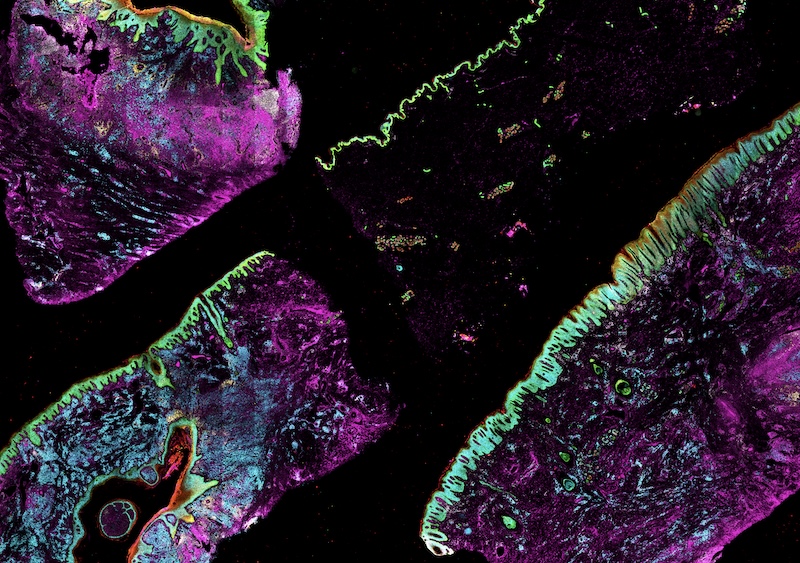
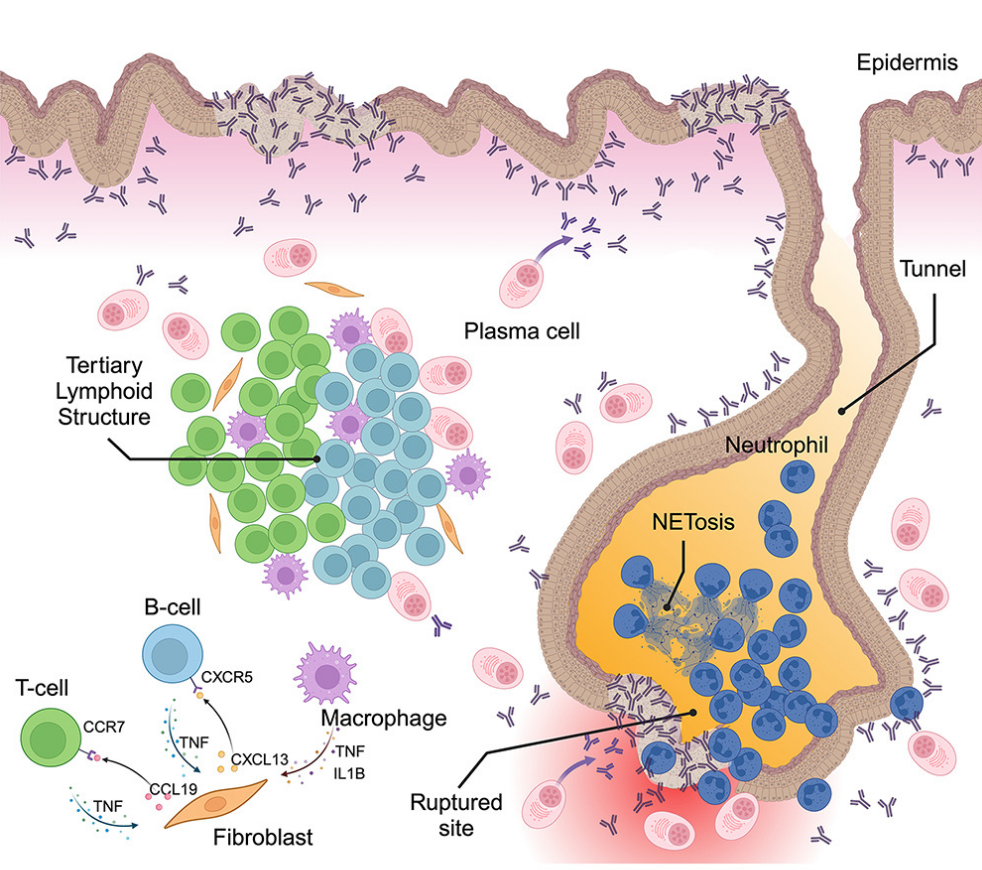
Hidradenitis suppurativa (HS) is a chronic, debilitating inflammatory skin disease characterized by keratinized epithelial tunnels that grow deeply into the dermis. Here, we examined the immune microenvironment within human HS lesions. Multi-omics profiling and multiplexed imaging identified tertiary lymphoid structures (TLSs) near HS tunnels. These TLSs were enriched with proliferative T cells, including follicular helper (Tfh), regulatory (Treg), and pathogenic T cells (IL17A+ and IFNG+), alongside extensive clonal expansion of plasma cells producing antibodies reactive to keratinocytes. HS fibroblasts express CXCL13 or CCL19 in response to immune cytokines. Using a microfluidic system to mimic TLS on a chip, we found that HS fibroblasts critically orchestrated lymphocyte aggregation via tumor necrosis factor alpha (TNF-α)-CXCL13 and TNF-α-CCL19 feedback loops with B and T cells, respectively; early TNF-α blockade suppressed aggregate initiation. Our findings provide insights into TLS formation in the skin, suggest therapeutic avenues for HS, and reveal mechanisms that may apply to other autoimmune settings, including Crohn’s disease.
PublicationGraphical Abstract
 Click to enlarge.
Narrated Minerva Stories
Narrated stories use multi-step narrations and annotations to walk a viewer through key features of the data. Narrated stories distill the multidisciplinary knowledge encompassed by each dataset into a single product that grounds the scientific analyses in the underlying data and metadata. Click the Minerva story icon for an interactive view of the full-resolution images.